- 1. What Are Traditional SEO Content Creation Tools?
- 2. The Rise of AI-Assisted Writing Tools
- 3. Why 'Assisted' Is the New Bottleneck
- 4. Manual vs. Automated SEO: The Real Difference in 2026
- 5. Where Assistants and Automation Seem to Overlap
- 6. The Future is Autopilot: Your Autonomous SEO Strategy
- 7. Conclusion: The Honest Bottom Line for Your Business
- Traditional SEO tools create workflow bottlenecks that pure automation solves.
- AI writing assistants help with drafting, but fail to address the entire SEO content lifecycle.
- True SEO automation integrates keyword research, writing, publishing, and optimization in one flow.
- WritePilot is the first tool to offer end-to-end SEO automation for any website platform.
- The future of SEO belongs to businesses that adopt fully autonomous content systems, not just faster writing tools.
In 2026, over 80% of all online content is algorithmically generated, yet less than 10% of businesses achieve their desired organic growth. The gap between content volume and content performance has never been wider. Your competitors are publishing more content, more frequently than ever before, creating a torrent of noise that is nearly impossible to overcome with manual effort alone.
This is where SEO content creation tools promise to help. They offer a solution to the endless demand for articles, blog posts, and landing pages. But a critical misunderstanding is costing businesses thousands of hours and millions in missed revenue. The tools that merely help you write are no longer sufficient.
The debate is over: true end-to-end automation is the only sustainable path to SEO success in 2026, rendering manual and merely "assisted" tools obsolete. This article breaks down why a fully autonomous system like WritePilot is no longer a luxury, but a core business necessity for achieving meaningful growth.
What Are Traditional SEO Content Creation Tools?
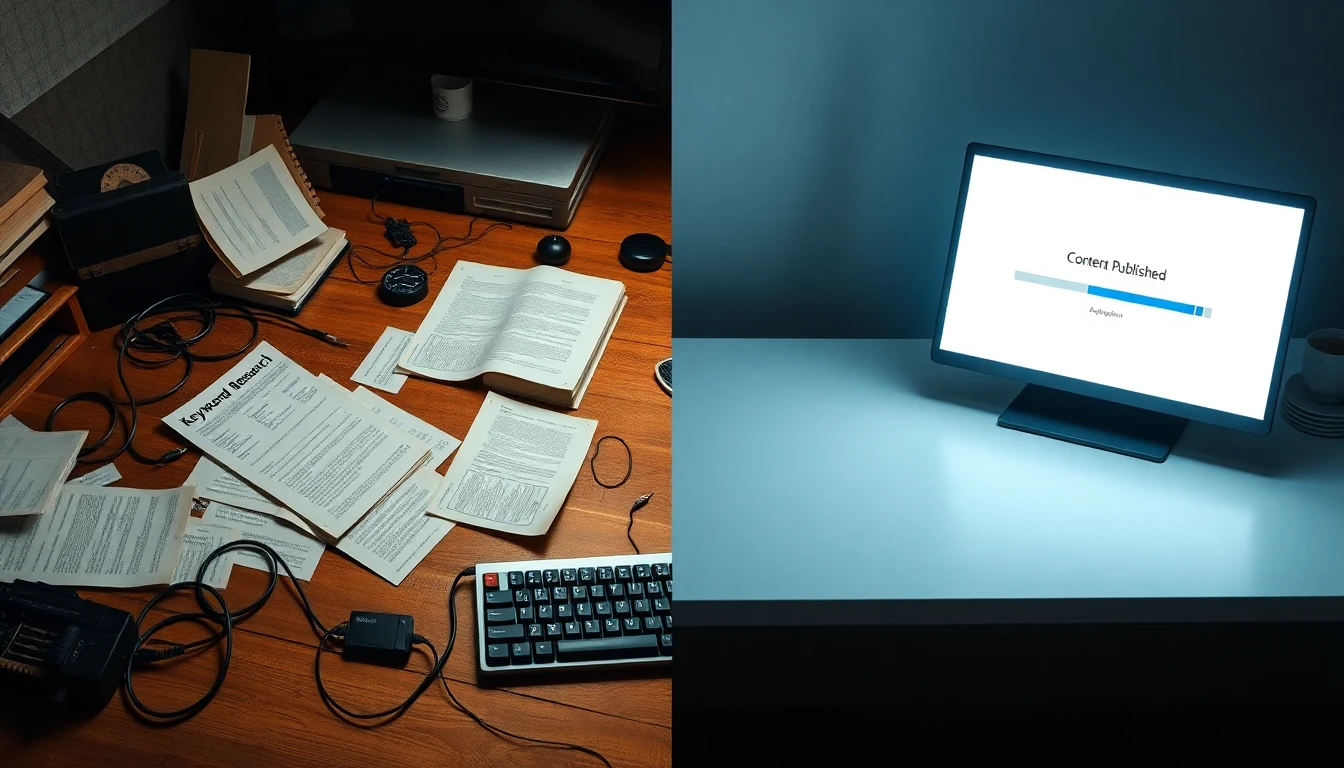
For years, the SEO toolkit has been fragmented. You use one tool for keyword research, another to generate a content brief, a word processor to write, a plagiarism checker for safety, and finally, a CMS to painstakingly format and publish. This is the traditional, hands-on approach. These tools are passive; they require a human operator at every stage.
Consider the average workflow for a single 1,500-word blog post. Market data from 2026 shows this process takes between 6 to 9 hours for an experienced content marketer. This includes 1 hour for research and briefing, 4-6 hours for drafting and editing, and another 1-2 hours for formatting, sourcing images, and publishing. For a business aiming to publish just two articles per week, this equates to over 800 hours of skilled labor per year.
This model is fundamentally broken. It doesn’t scale. Every article you decide to create is a new project that consumes significant resources. The core problem with traditional SEO tools is that they optimize tasks, not the entire workflow. They might help you find a keyword faster, but they do nothing to reduce the immense manual effort of turning that keyword into a published, ranking article. You are still the engine, and there is a hard limit on your output.
The Rise of AI-Assisted Writing Tools
The last few years saw the emergence of AI writing assistants. These tools promised to accelerate the drafting process, and to some extent, they delivered. By feeding a prompt to an AI, you could generate a first draft in minutes instead of hours. This seemed like a significant leap forward, making it a popular choice for teams looking to increase their output.
However, this approach introduces a new, deceptive bottleneck. While drafting time is reduced, the time spent on editing, fact-checking, and optimizing the AI-generated text often increases. More importantly, these tools stop at the draft. They do not perform keyword research, generate AI images, or publish directly to your WordPress, Webflow, or Shopify site. You are still left with the most tedious parts of the job.
These AI assistants act as a supercharged word processor, but they are not a true SEO engine. They don’t understand your business’s unique niche, learn your content tone, or track how articles perform to improve future output. They are generic assistants, not specialist strategists. Exploring our blog reveals a deeper dive into how content strategy must evolve beyond simple text generation.
Why 'Assisted' Is the New Bottleneck
The uncomfortable truth about AI-assisted writing in 2026 is that it creates an illusion of productivity. You can generate 20 drafts in an afternoon, but this creates a massive downstream problem. You now have 20 articles that need to be edited, optimized with keywords, matched with images, and manually uploaded and formatted in your CMS.
You have simply traded a writing bottleneck for a publishing and management bottleneck. The total time-to-value for each piece of content remains stubbornly high. The goal is not to write articles; the goal is to publish high-performing content that drives traffic and revenue. AI assistants fail to address the entire journey from keyword to customer.
This is the core philosophy behind WritePilot. We recognized that the real challenge was not writing, but the entire, fragmented SEO content workflow. An effective solution must be autonomous. It needs to handle everything. From identifying your niche and discovering high-potential keywords to writing, publishing, and even improving based on Google ranking data. That is not assistance; that is automation.
WritePilot is the first SEO autopilot that connects to any website—including WordPress, Webflow, Shopify, and even custom React or Vue sites. It doesn’t just write; it publishes. It doesn't just publish; it ranks. Our internal data shows that by fully automating the workflow, we can reduce the time-to-published-article from over 8 hours to virtually zero.
Manual vs. Automated SEO: The Real Difference in 2026
Choosing the right approach is the most critical strategic decision you’ll make for your content program this year. The differences are not incremental; they are fundamental. This table breaks down the practical realities of each approach.
| Factor | AI-Assisted Writing Tools | Fully Automated SEO (WritePilot) | Why It Matters for Growth |
|---|---|---|---|
| Time Per Article | 2-4 hours (drafting, editing, publishing) | ~5 minutes (setup and approval) | Your team's time is freed up to focus on high-level strategy instead of manual execution. |
| Scalability | Limited by editing and publishing capacity | Virtually unlimited, up to hundreds of articles per month | True scale allows you to dominate long-tail keywords and capture vastly more search territory. |
| Keyword Strategy | Manual research required before writing | Automated niche detection and keyword discovery integrated into the workflow | Ensures every article is targeting a viable, data-backed opportunity without manual research cycles. |
| Publishing Workflow | Manual copy-pasting, formatting, and image sourcing | Direct, one-click publishing to WordPress, Webflow, Shopify, and any other platform | Eliminates the single biggest time sink in the content process, ensuring consistency and speed. |
| Performance Feedback | Requires separate analytics tools and manual analysis | Learns from Google Search Console data to improve future article performance | Creates a self-improving system that gets smarter over time, optimizing for what actually ranks. |
As the table clearly shows, the two approaches solve different problems. AI assistants solve the "blank page" problem. A fully automated system like WritePilot solves the entire "organic growth" problem. It’s the difference between getting a faster horse and getting a car.
Where Assistants and Automation Seem to Overlap
The primary area of overlap is, of course, the use of AI to generate text. Both an AI assistant and an automated platform like WritePilot use large language models as a foundational technology to create paragraphs, sentences, and headers. This shared technological root is what causes most of the market confusion. But what happens before and after the text is generated is what truly matters.
Beyond the First Draft
An AI assistant's job is done once the text exists. Your job, however, has just begun. Now you must act as the SEO expert, the editor, the publisher, and the strategist. You have to ask: Is this text optimized for my target keyword? Does it align with search intent? Does it have the right internal links? Is the tone consistent with our brand?
A true automation platform like WritePilot is designed to answer these questions for you. It’s not just a writer; it’s an integrated SEO system. The AI engine in WritePilot is purpose-built for SEO content. It understands keyword density, semantic relevance, and user engagement signals. When WritePilot generates an article, it’s not just a block of text; it’s a pre-optimized, publication-ready asset designed from the ground up to rank on Google.
This distinction is critical: one gives you words, the other gives you a finished product. With over 3,400 articles published by our system leading to 180k monthly clicks for our users, the data is clear. An integrated approach works.
The Future is Autopilot: Your Autonomous SEO Strategy
Looking ahead, the complexity of search engine algorithms will only increase. Winning at SEO in 2026 and beyond requires a system, not just sporadic effort. It demands consistency, scale, and intelligence. The future of content creation is a "set it and forget it" model where your website’s content strategy runs on autopilot, continuously capturing new keywords and driving traffic.
This is not a distant dream; it is what we are building at WritePilot. Our system has already achieved a 92% indexing rate on Google for a reason: it’s designed for modern search. For one of our beta users, this translated to a jump of +2,400 monthly visitors and a #1 Google position for their primary keyword within 60 days—all with zero manual writing.
The ultimate competitive advantage is a system that produces consistent, high-performing content with zero friction. While your competitors are stuck in the endless cycle of drafting, editing, and publishing, your SEO engine will be working for you 24/7. Find out more about our vision for a fully autonomous web when you read about us.

Conclusion: The Honest Bottom Line for Your Business
The landscape of SEO content creation tools has permanently shifted. Manual tools are inefficient. AI writing assistants, while helpful for drafting, create new bottlenecks and fail to address the complete SEO workflow. They are a bridge technology that is already becoming outdated.
For businesses, marketers, and website owners serious about organic growth in 2026, the choice is clear. You must move from task-based tools to a system-based solution. You need an autonomous engine that handles keyword research, content creation, optimization, and publishing seamlessly. You need an SEO autopilot.
This is the definitive solution we provide at WritePilot. We are so confident in this future that we invite you to try it for 30 days free on our beta plan. Secure your spot, lock in early-bird pricing forever, and let the results speak for themselves. Stop writing, start ranking. Get started at https://writepilot.app.